-
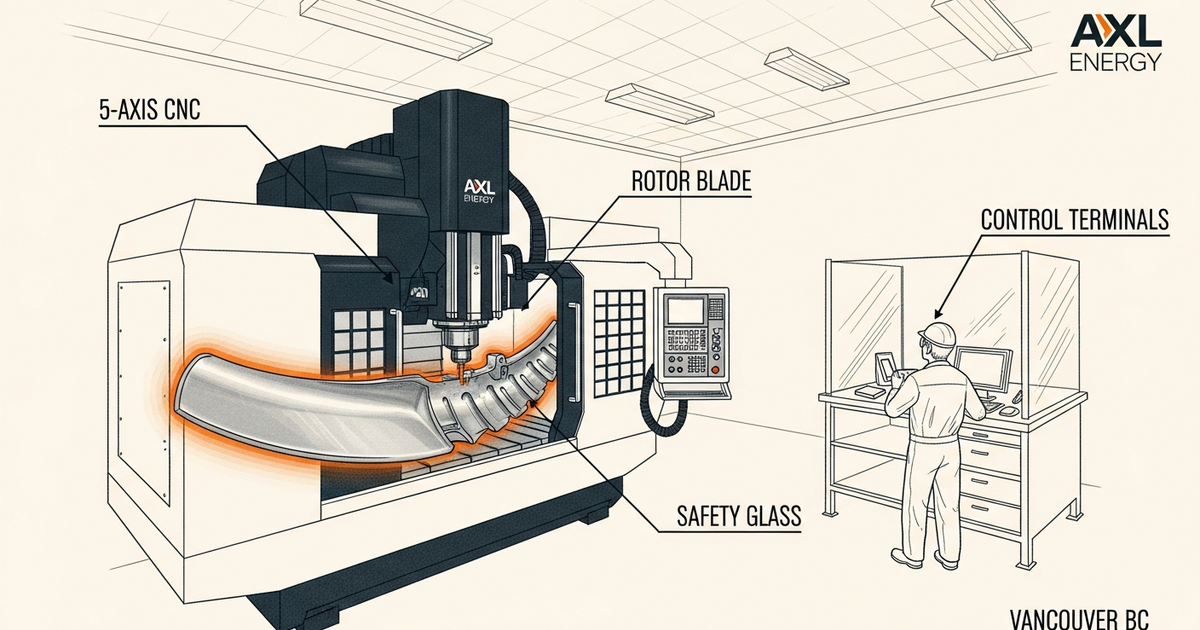 MACHINED IN VANCOUVER
We don't build dams.
We unlock the ones already underground. Turbines engineered here, in BC.
-
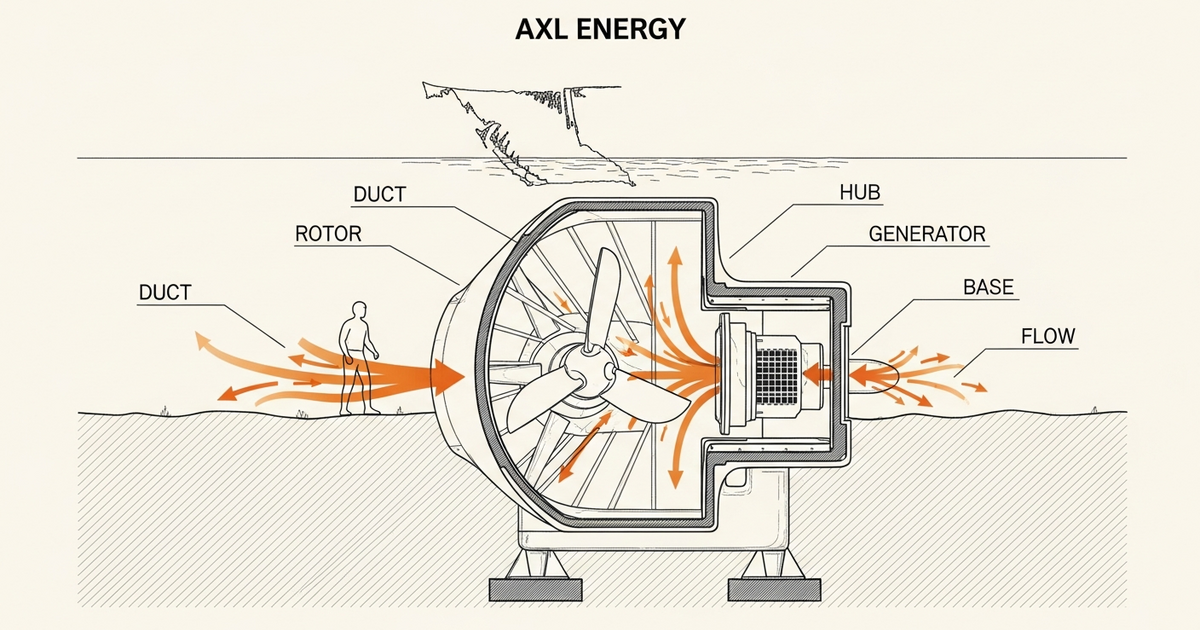 TIER 2 HARVESTERS
Ducted. Deployed. Underwater.
A venturi around a propeller. 30 to 50 percent more power from the same rotor at the same current.
-
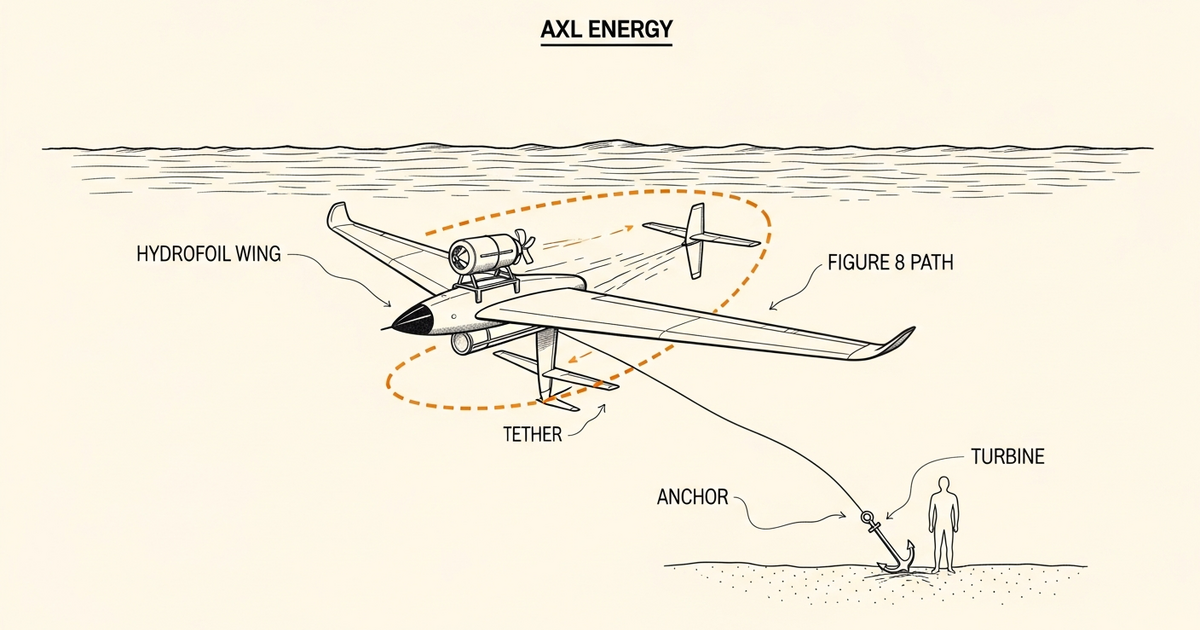 TIER 3 KITES
Figure-eight orbits, 96x power.
Bernoulli described this 300 years ago. We fly it underwater where no stationary turbine would pay for itself.
-
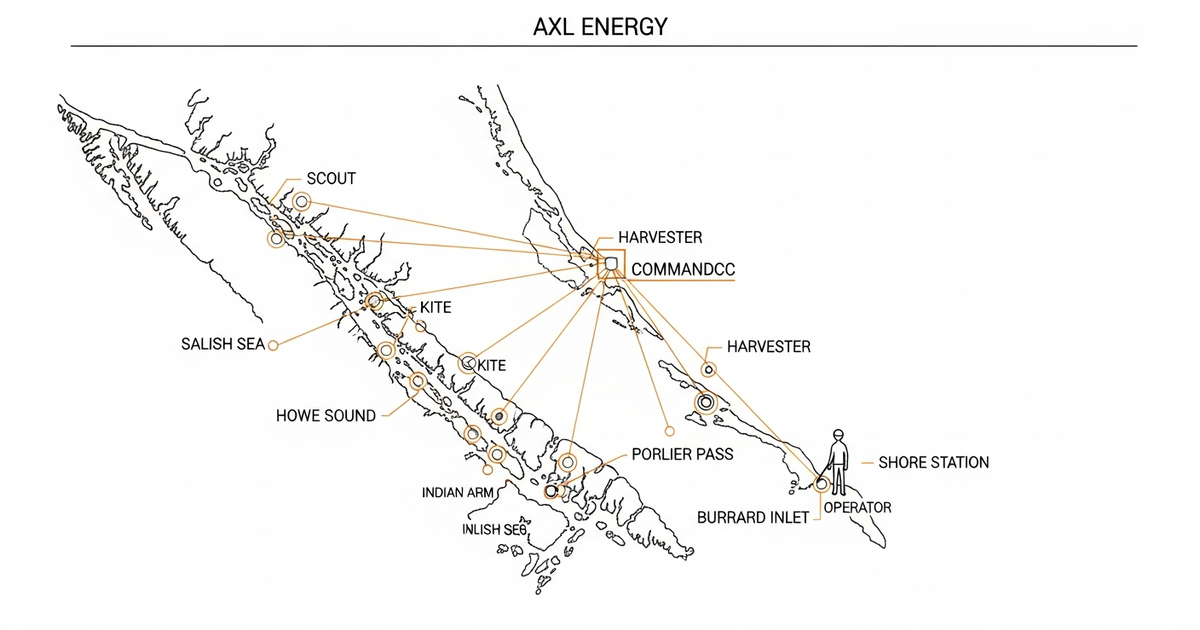 SALISH SEA FLEET
88 nodes. One protocol.
Scouts, harvesters, kites, and in-pipe turbines all reporting to the same command fabric. Engineered here. Deployed here.
-
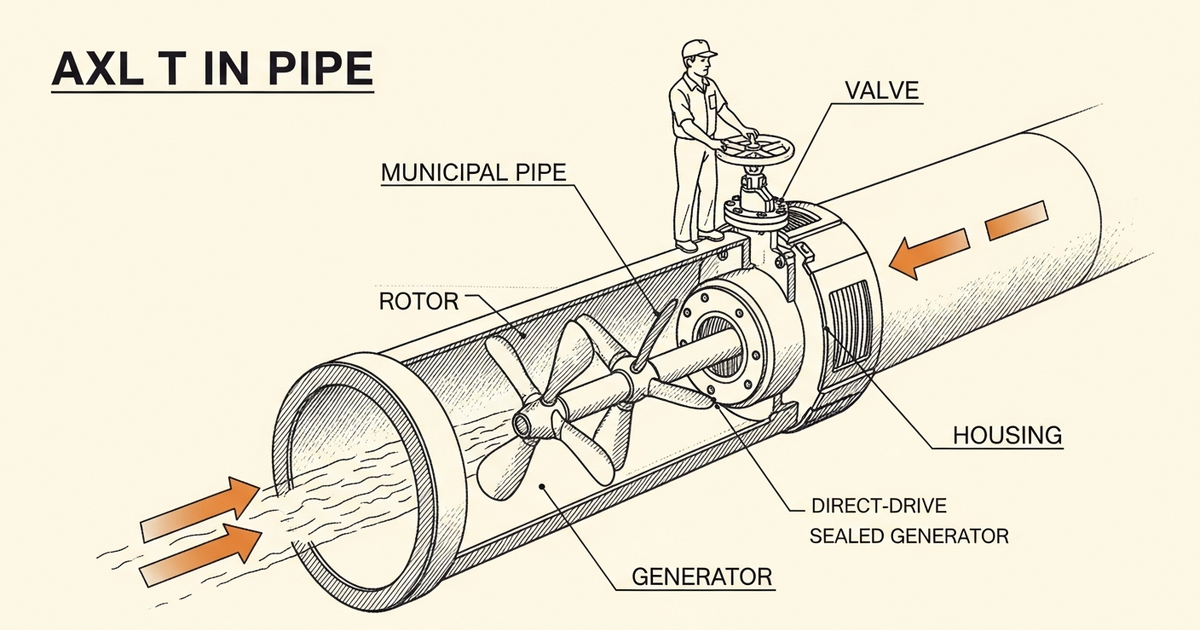 AXL-T IN-PIPE
The pipes already move the water.
We just put a turbine in the pressure-drop you were going to waste anyway. 45 AXL-T units live across Metro Vancouver.


